Three BFT BioDryer Installations Startup in One Month
Three different installation plants with three different combinations of BFT BioDryers show how modular and adaptable BFT technology is
Three more BFT BioDryers have started operation in Italy: one each at municipal treatment plants in Viggiano and Bragiano, in the southern region of Basilicata, and one at Porto Recanati, on the Adriatic coast of the Marche. All three are part of a wider national effort: Italy’s PNRR, its recovery-plan funding backed by the EU's Next Generation EU program, to modernize how it treats sewage sludge—in this case with the help of BFT technology.
The BFT BioDryer
The BFT BioDryer dries sewage sludge biologically. Instead of burning fuel to evaporate water, it relies on naturally occurring thermophilic bacteria, whose activity produces the heat that drives off moisture. That reduces the weight and volume of the material before it moves on to final treatment or disposal. Less material means fewer truckloads leaving the plant and less sent to landfill — reductions that can reach up to 75%, lowering both cost and environmental impact.
Viggiano, Basilicata: Four BFT BioDryers
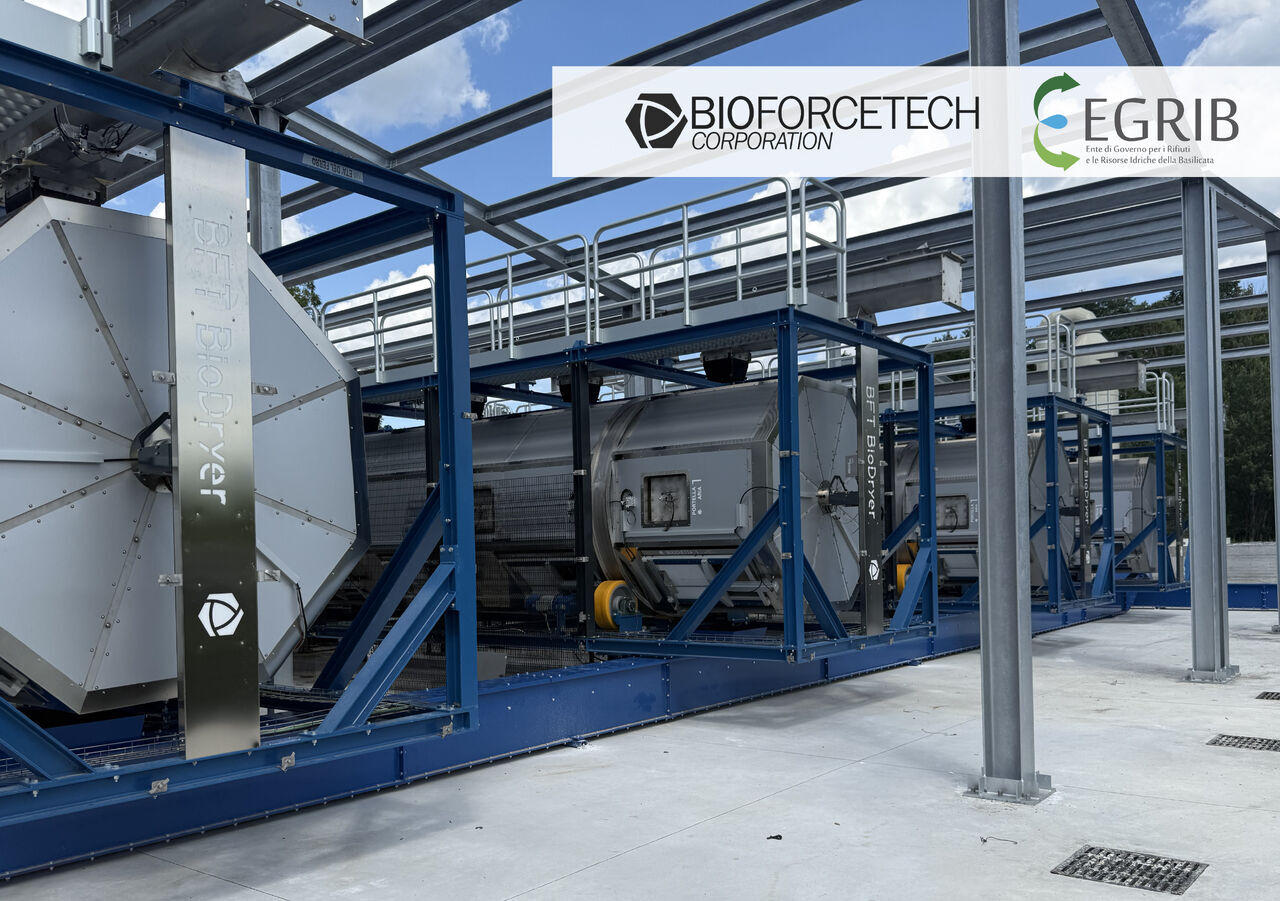
The first system was installed for EGRIB, the public authority responsible for waste and water resources across Basilicata, at its treatment plant in Viggiano, in the province of Potenza. The site processes roughly 4,000 tons of sewage sludge a year.
Viggiano is also a good illustration of how adaptable the technology is. The units were arranged across a staggered, split-level layout to fit the space available at the plant. BFT dryers do not require a large, purpose-built hall; the system can be shaped to a constrained or irregular site.
Baragiano, Basilicata: Two BFT BioDryers
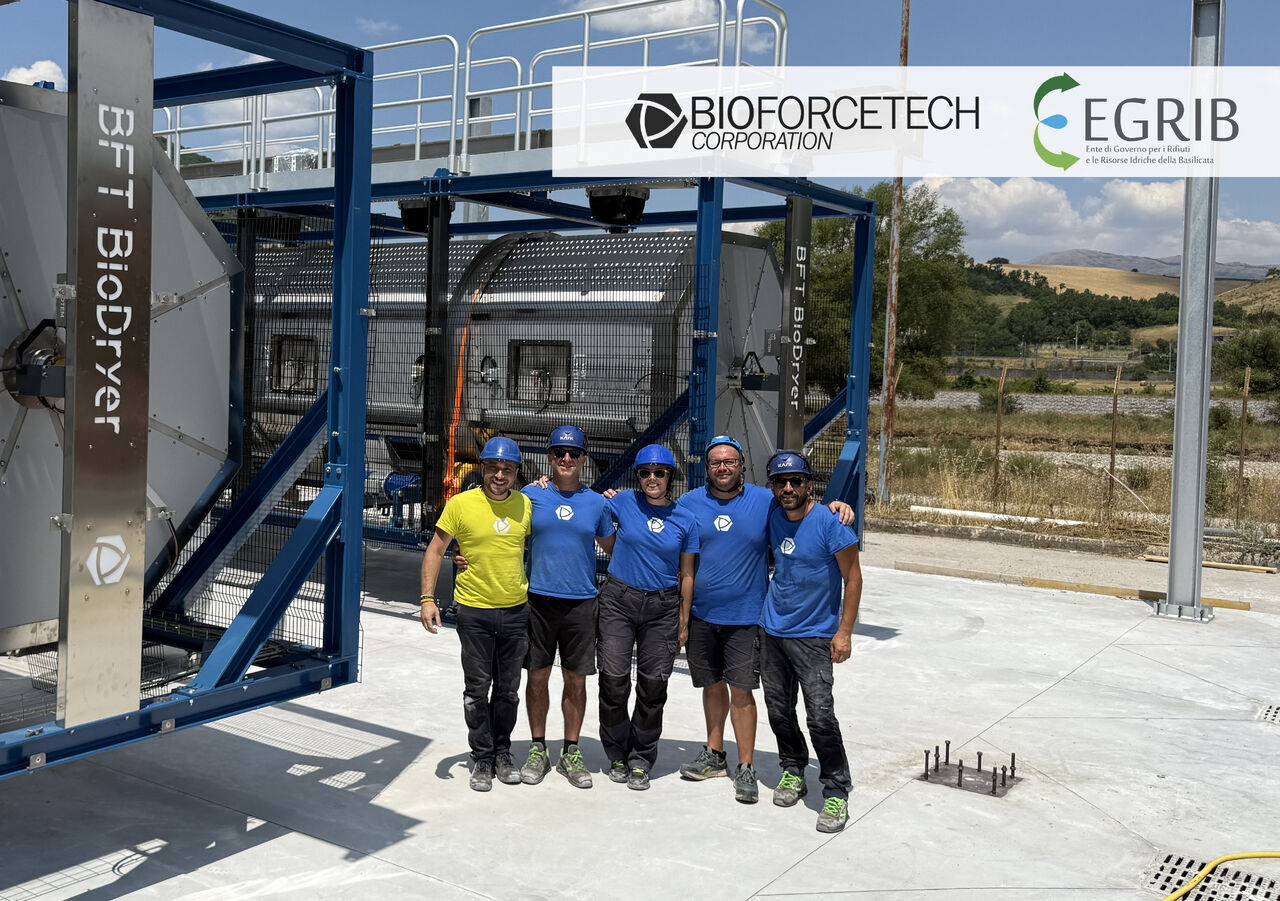
The second was installed for EGRIB, the public authority responsible for waste and water resources across Basilicata, at its treatment plant in Viggiano, in the province of Potenza. The site processes roughly 2,000 tons of sewage sludge a year.
Porto Recanati, Marche: One BFT BioDryers
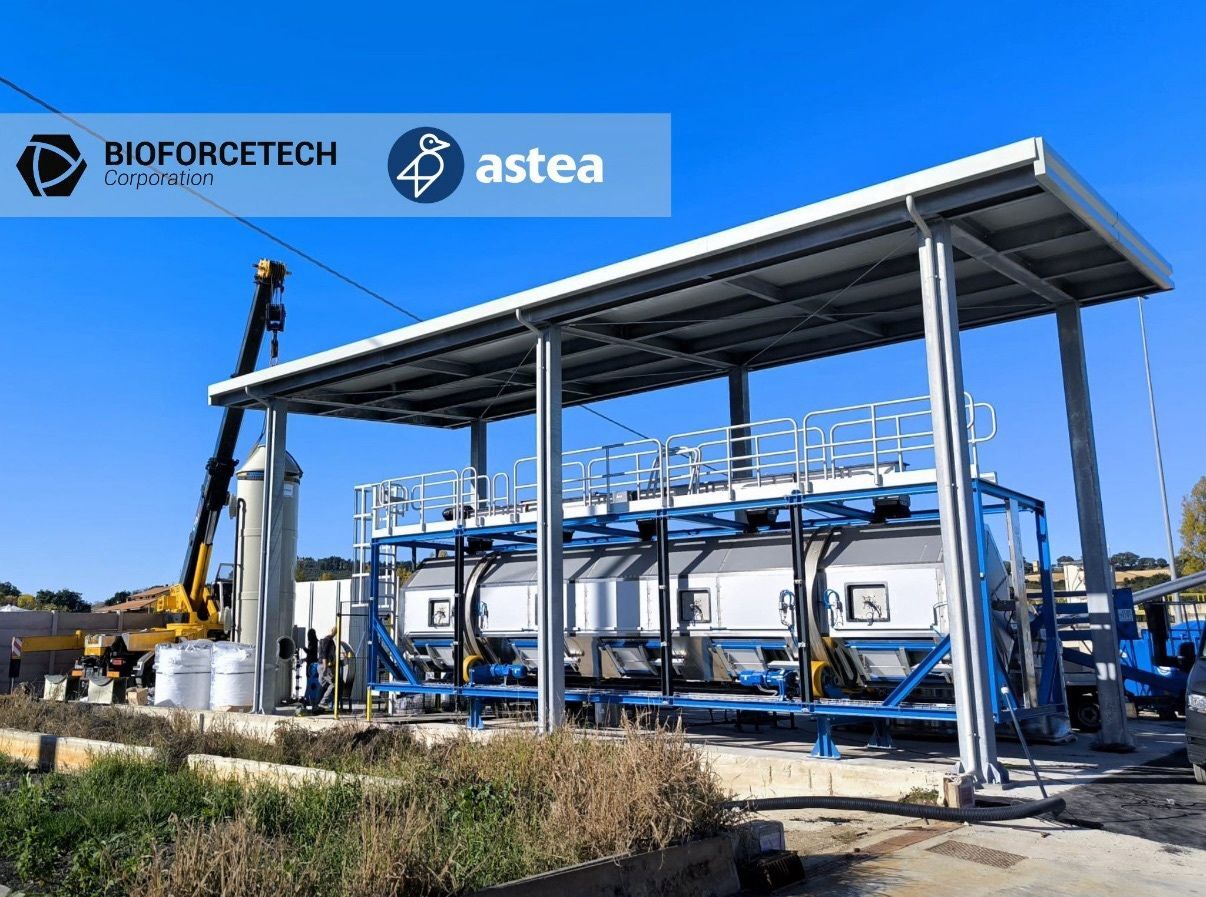
The third system started up at ASTEA's "Santa Maria in Potenza" wastewater treatment plant in the coastal town Porto Recanati. ASTEA is the multi-utility that provides water, gas, electricity and waste services to Porto Recanati and a group of neighboring towns.
The plant's first load of biosolids is now being dried. For a community whose economy is tied to a working coastline, cutting the volume of sludge that has to be moved and disposed of is a tangible benefit: fewer trucks, less landfill, lower cost.
True Modularity Allows for Install Flexibility
The BFT BioDryer is designed to accomodate plants of varying sizes by placing units in line. These pre-fabricated units can be installed quickly, and a given system can expand easily by adding BFT BioDryers to existing installs. Having three systems start up in the same month with unit counts varying from one to four shows how this modularity allows for customization.
Part of a larger shift
Neither of these installations is a one-off. Italy's National Recovery and Resilience Plan (PNRR) plan set aside dedicated funding to build innovative sludge-treatment plants, and utilities across the country are now putting that funding to work. What these three plant startups demonstrate is that biological drying fits that need—and that it can be sized and shaped to the site rather than the other way around. We'll continue to share progress as more systems come online.