OurCarbon® Biochar: A Drop-In Reduction for Embodied Carbon
OurCarbon® biochar replaces a portion of fine aggregates in standard concrete mixes, locking carbon into building stock for generations.
OurCarbon® biochar replaces a portion of fine aggregates in standard concrete mixes, locking carbon into building stock for generations. Derived from biosolids, a recoverable waste stream from wastewater treatment, it is EPD-verified and proven across commercial pours.
The problem.
The built environment has a large environmental burden, accounting for about 39% of global energy-related carbon emissions. The construction industry is increasingly under pressure from regulatory bodies, governments, and consumers to lower their emissions and environmental impact–all without adding costs or compromising safety and durability.
For decades, the industry's sustainability efforts were centered on operational energy, but as buildings become more energy-efficient, embodied carbon—the emissions locked into materials before a building ever opens its doors—is becoming the dominant share of its emissions impact. In new, highly efficient buildings, embodied carbon can account for nearly half of lifetime emissions. According to the World Green Building Council, embodied carbon will be responsible for half the carbon footprint of all new construction from now to 2050.
The regulatory environment is adapting to this new reality. The Federal Buy Clean Initiative, LEED's materials credits, Buy Clean California Act, and a growing number of municipal and institutional procurement policies now require or encourage Environmental Product Declarations (EPDs) for structural materials. Several jurisdictions are moving toward embodied carbon limits in building codes. Voluntary embodied carbon reduction targets are becoming standard practice for major developers, institutions, and architecture firms.
The opportunity.
Within this landscape, concrete presents both the largest problem and opportunity. Concrete production accounts for approximately 8% of global emissions. While cement drives the vast majority of concrete's emissions, it is truly hard to abate. Progress on cement decarbonization is happening, but it is slow and capital-intensive. On the other hand, aggregate replacement offers an immediately accessible lever. Although aggregate emissions are small compared to cement, their structural role makes them ideal for carbon storage: a material that can substitute for aggregate while carrying a negative carbon footprint effectively converts a net-emitting ingredient into an asset, reducing the overall embodied carbon of the mix without interfering with cement chemistry, structural design, or the construction process. This substitution can happen without changes to how concrete is batched, poured, finished, or specified.
The scale of the opportunity is significant. A 2025 RMI analysis found that substituting bio-based alternatives in new US residential construction can achieve an average 107% reduction in net embodied carbon emissions compared to business-as-usual construction. Aggregate substitution alone contributed nearly 10.5% of total storage potential. Scaled across the roughly 1.9 billion square feet of new US residential construction, 27.7 million metric tons of CO₂e storage could be achieved annually. Similarly, another study by researchers at the University of California, Davis found that fully replacing conventional building materials with CO2-storing alternatives in new infrastructure could store 16.6 ± 2.8 billion tonnes of CO2 each year—roughly 50% of anthropogenic CO2 emissions in 2021. Importantly, most of this storage (11.5 ± 1 Gt of CO2) comes from aggregates used in concrete and asphalt pavement. This large capacity for fixed carbon comes from the large mass of aggregates used in these materials, which outweigh other materials by threefold.
OurCarbon®: Bioforcetech’s unique solution.
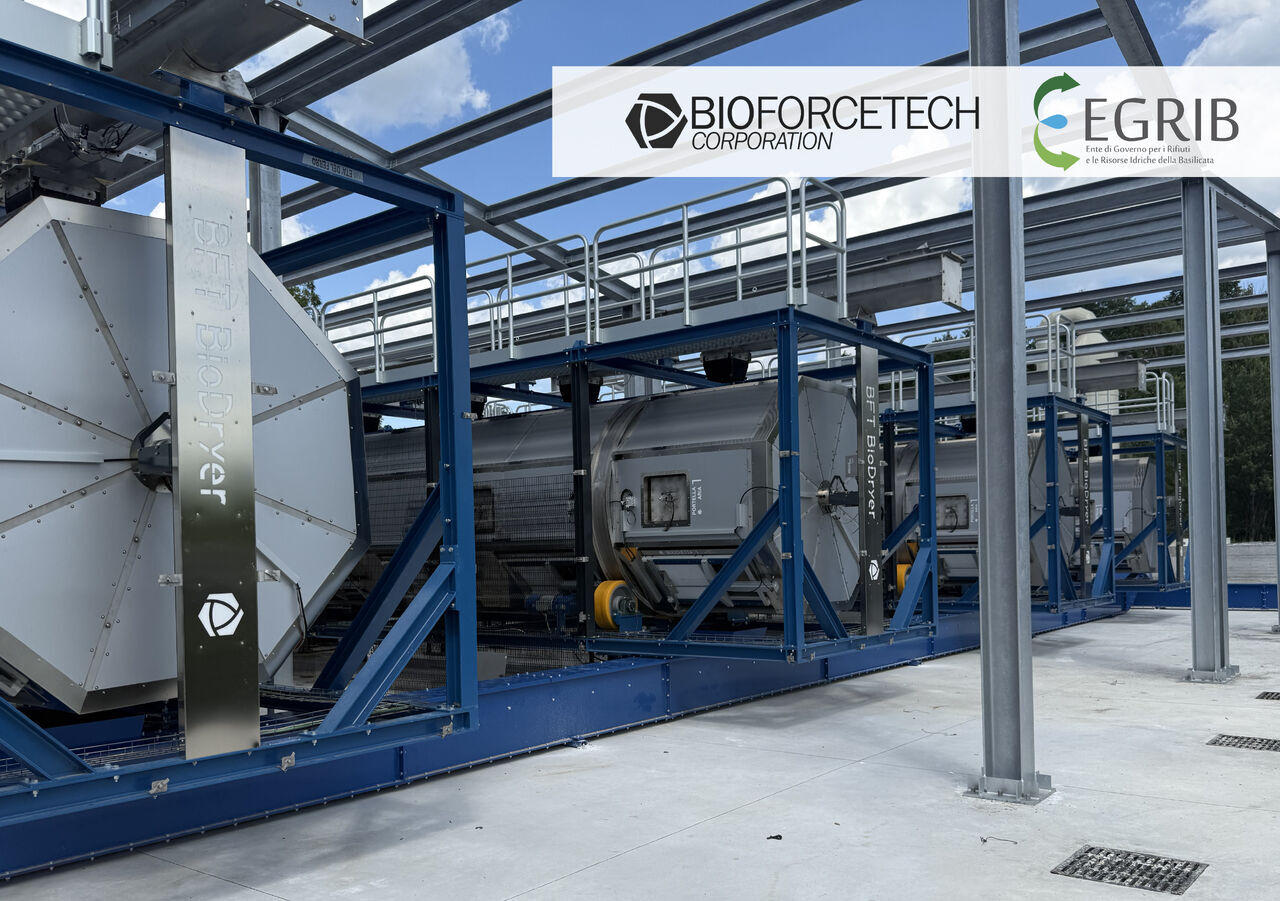
OurCarbon® is produced through a first-of-a-kind biomass conversion technology that utilizes bacteria to dry wet sewage sludge from wastewater treatment plants (WWTPs), then thermally converts the dry organic into biochar through a proprietary, advanced hybrid pyrolysis system. This biochar output has unique physicochemical properties that enable applications into various industrial products, including aggregate replacement in concrete. Third-party verified LCAs and EPDs of OurCarbon® specifically confirm a GWP of over -1 ton CO2e/ton.
Biochar aggregate is one of a few products in RMI’s analysis with an existing, third-party verified EPD—it is not a speculative future material but one that can be specified and accounted for in whole-building LCAs today. Its physical properties—particle size, density, and gradation—are compatible with fine aggregate replacement in standard concrete mixes.
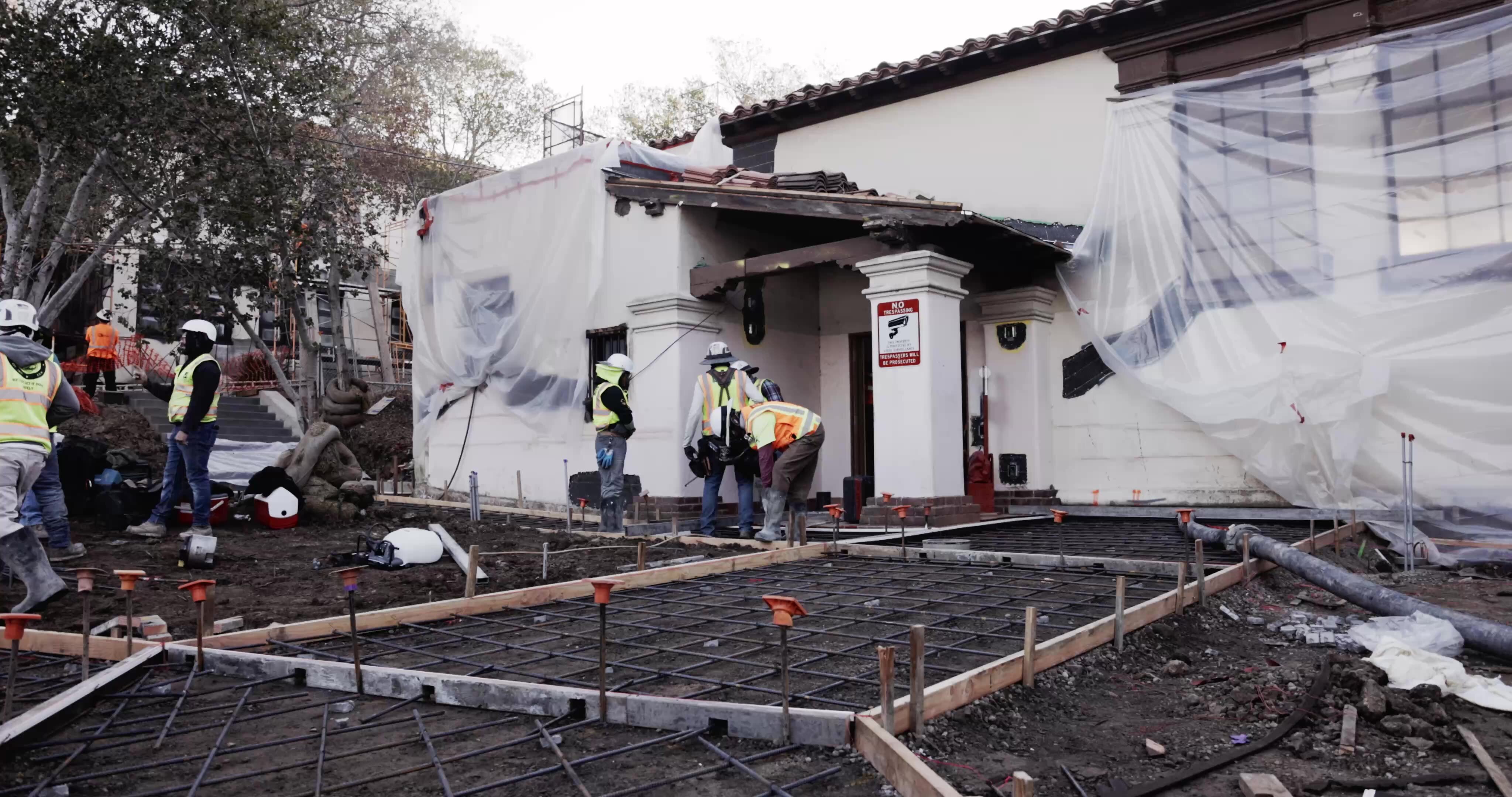
OurCarbon® has been tested and deployed across more commercial concrete pours from the Bay Area to the East Coast. Mixes incorporating OurCarbon® as a fine aggregate replacement have demonstrated a Strength Activity Index (SAI) of 93.4% in standard laboratory testing, confirming structural performance within acceptable limits for standard applications. In a case study at an Oakland, California school campus, concrete mixes containing OurCarbon® achieved a 12 - 16.6% reduction in GWP, with 76.5 lbs of CO2 stored per cubic yard. Other pilots have pushed doses beyond 200 lbs per cubic yard with greater reductions. These results reflect real-world performance across a range of mix designs and project types, validating OurCarbon® as a specification-ready material for projects targeting embodied carbon reductions.
In a sector where decarbonization solutions have often been expensive, slow to adopt, or contingent on future technology, aggregate replacement with OurCarbon® biochar offers something rare: a performance-neutral intervention that is available now.
For technical specifications, mix design guidance, EPD documentation, or to discuss procurement, contact Bioforcetech at info@bioforcetech.com.
About Bioforcetech
Bioforcetech is a US-based innovator in biosolids management, transforming municipal wastewater residuals into carbon-negative materials. Founded in 2012 and headquartered in South San Francisco, California, the company operates more than 40 deployed units across 17 sites in the United States and Italy, including the only full-scale biosolids pyrolysis system currently running in North America. Its patented technology combines biological drying with advanced pyrolysis to convert biosolids into OurCarbon®, a sustainable biochar used in concrete mixes, inks, polymers, and other industrial applications. The process also reduces PFAS—so-called "forever chemicals"—in biosolids to non-detectable levels, addressing one of the wastewater sector's most pressing contamination challenges. Visit https://www.bioforcetech.com.
BFT's flagship installation at Silicon Valley Clean Water in Redwood City, California, is permitted under the Bay Area Air Quality Management District, one of the strictest air-regulating bodies in the US. In 2020, a study led by the US Environmental Protection Agency (EPA) confirmed that the BFT operated process reduces PFAS in biosolids to non-detectable levels in the resulting biochar. More recent third-party testing by Brown and Caldwell at Silicon Valley Clean Water has confirmed 99.98% PFAS removal across their full commercial system; the BFT BioDryer and BFT SigmaOne Pyrolysis.
About OurCarbon
Divert Waste. Fix Carbon. Change Industry.
OurCarbon® is a carbon-negative material created from organic waste that would otherwise contribute to environmental harm. A brand of Bioforcetech, OurCarbon is produced through BFT's biological drying and advanced pyrolysis technology, which transforms waste into a stable, fixed carbon that is locked away for centuries. Verified through a third-party Environmental Product Declaration, every ton of OurCarbon sequesters 1.02 tons of CO2e and avoids up to 24 tons of CO2 versus landfill disposal. OurCarbon is used to produce low-carbon structural concrete and to replace petroleum-based black pigments in inks, coatings, polymers, paints, and fabric dyes. Starting with municipal biosolids, OurCarbon is also expanding to additional organic waste streams. Visit www.ourcarbon.co